

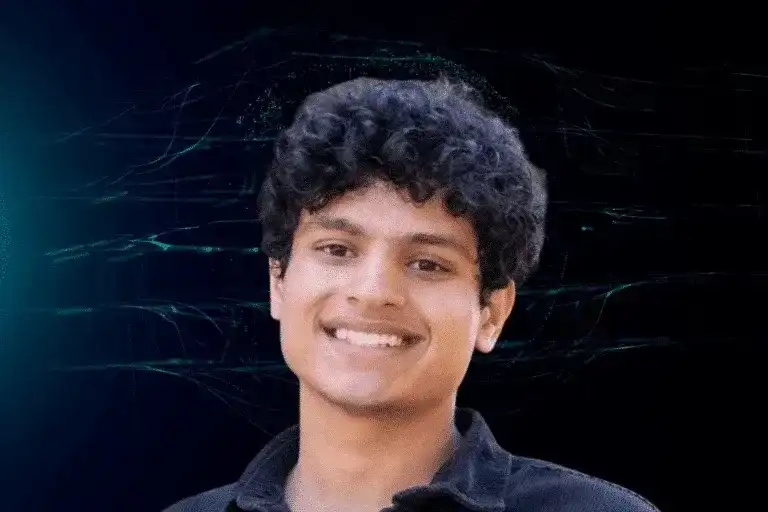
Adarsh Hiremath Mercor is one of the most compelling founder stories to emerge from Silicon Valley in recent years. At just 22 years old, Adarsh Hiremath co-founded Mercor — an AI talent marketplace now valued at $10 billion — after walking away from a Harvard Computer Science degree midway through his sophomore year.
What began as a dorm room experiment in freelance developer matching has evolved into the infrastructure layer powering AI model training for OpenAI, Google DeepMind, and Anthropic. As Co-Founder and CTO, Hiremath built the technical backbone of one of the fastest-growing startups in history — and in doing so, became one of the world’s youngest self-made billionaires.
The story of Adarsh Hiremath Mercor is not just about a $10 billion valuation — it is about a generation of founders who chose to build instead of study.
Who Is Adarsh Hiremath? The Mind Behind Mercor
Adarsh Hiremath is the Co-Founder and Chief Technology Officer of Mercor, a San Francisco-based AI talent marketplace that connects domain experts — doctors, lawyers, scientists, and engineers — with the world’s top AI laboratories to train and refine large language models.
Born and raised in the Bay Area of California to Indian-origin parents, Hiremath attended Bellarmine College Preparatory in San Jose — an all-boys Jesuit school where he first met his future co-founders, Brendan Foody and Surya Midha.
The three became inseparable on the school’s competitive policy debate team, reportedly becoming the first squad to win all three major national policy debate tournaments in the same year. That early training in structured reasoning, argumentation, and rapid decision-making would prove far more valuable than anything a lecture hall would later offer.
Hiremath went on to enroll in a concurrent bachelor’s and master’s program in Computer Science at Harvard University — one of the most demanding academic tracks in the country. But midway through his sophomore year, he dropped out to focus on Mercor full-time.
“If I weren’t working on Mercor, I’d have just graduated a few months ago,” he said after the company’s $10 billion valuation was announced. “Everything changed so fast.”
Adarsh Hiremath Mercor: From Dorm Room to $10 Billion
The founding story of Mercor begins not in a boardroom but at a hackathon in São Paulo, Brazil. There, Foody, Hiremath, and Midha landed on a deceptively simple idea: match skilled freelance programmers in India with technology companies in the United States, handle the logistics, and keep a percentage of each deal.
Their first client paid $500 a week for a developer. Mercor paid the engineer roughly 70% and kept the rest as a service fee.
Within nine months of launching in 2023, the trio had turned that idea into a company with a $1 million revenue run rate — all while still enrolled in college.
Then came the pivot that changed everything.
As large language models like OpenAI’s GPT evolved at speed, a new bottleneck emerged: AI labs needed not just coders, but domain experts — physicians who could evaluate medical outputs, lawyers who could grade legal reasoning, and financial analysts who could assess investment memos.
Hiremath and his co-founders saw the gap before almost anyone else.
Mercor pivoted from an AI hiring platform into the infrastructure layer for human-powered AI training. The company now connects its network of over 30,000 expert contractors with AI labs, providing the human feedback that turns capable models into commercially reliable ones.
His Role as CTO: Building the Technical Backbone
While Brendan Foody, CEO of Mercor, drives the company’s commercial vision and public narrative, Adarsh Hiremath quietly powers what makes Mercor technically irreplaceable.
As CTO, Hiremath oversees Mercor’s AI architecture, product engineering, evaluation workflow design, and the systems that match the right human expert to the right AI training task at scale.
His background in computer science — combined with the analytical precision developed through years of competitive debate — makes him uniquely suited to this role.
One of his most significant technical contributions is APEX (AI Productivity Index) — Mercor’s proprietary benchmark that measures how well AI models perform real-world professional work.
Unlike conventional benchmarks that test abstract reasoning or math puzzles, APEX evaluates models on 200 tasks drawn from the actual workflows of investment bankers, lawyers, consultants, and physicians. The advisory group behind APEX includes former U.S. Treasury Secretary Larry Summers, ex-McKinsey managing partner Dominic Barton, legal scholar Cass Sunstein, and cardiologist Eric Topol.
Hiremath also co-led the development of APEX-SWE, a software engineering benchmark built in partnership with Cognition. It tests whether AI models can handle complex, real-world development work — not just pass abstract coding tests. At launch, every frontier model failed nearly 60% of real production tasks.
These benchmarks do not just make Mercor look credible — they make Mercor indispensable. AI labs need to know where their models fall short. Mercor tells them, then sells the solution.
The Thiel Fellowship: A $100,000 Bet on the Future
In 2024, Adarsh Hiremath, alongside Brendan Foody and Surya Midha, was awarded the Thiel Fellowship — one of the most prestigious and unconventional honors in the startup world.
Founded by billionaire investor Peter Thiel, the fellowship provides $100,000 grants and access to a powerful network of founders, investors, and scientists to young entrepreneurs who skip or stop out of college to build companies.
The fellowship did more than validate the founders’ decision to leave school. It plugged them into a network that included Thiel himself, who became an early investor in Mercor, along with Twitter co-founder Jack Dorsey and former U.S. Treasury Secretary Larry Summers.
For Hiremath, the fellowship was confirmation that the instinct he had followed — the one that said building was more valuable than studying — was right.
Mercor By the Numbers: The Stats Behind the Story
The numbers behind Adarsh Hiremath Mercor’s growth are not the kind you see often in startup history.
- $10 billion valuation — achieved via a $350 million Series C in October 2025, led by Felicis Ventures, with Benchmark, General Catalyst, and Robinhood Ventures participating
- 5x valuation increase in just eight months — from $2 billion (February 2025) to $10 billion (October 2025)
- $1.5 billion+ in estimated ARR as of May 2026, up from $760 million at end of 2025
- $1.5 million+ paid daily to over 30,000 expert contractors averaging $85+ per hour
- $0 to $500 million ARR in 17 months — a pace reportedly faster than Anysphere, makers of Cursor
- Profitable on a free-cash-flow basis, with $6 million in profit in the first half of 2025
- Clients include OpenAI, Google DeepMind, Anthropic, Amazon, Meta, Microsoft, and Nvidia
As TechCrunch reported, Mercor’s fortunes accelerated sharply after Meta’s $14.3 billion acquisition of a 49% stake in Scale AI prompted OpenAI and Google DeepMind to seek alternative data training partners — and Mercor was perfectly positioned to fill that void.
The APEX Benchmark: Hiremath’s Technical Masterpiece
The APEX AI Productivity Index deserves special attention as a strategic asset, not just a product feature.
Most AI benchmarks measure what a model can do in a controlled environment. APEX measures what a model can deliver in a real business context. The benchmark covers 200 cases across investment banking, corporate law, strategy consulting, and general medicine.
At launch, GPT-5 led with a 64.2% score — meaning even the best available model failed more than a third of real professional tasks. No model met the production bar.
This framing is strategically brilliant. APEX gives Mercor a credible, published reason why every AI lab needs human experts. And it positions Mercor as the only company that can supply those experts at scale.
Hiremath’s engineering team has since extended APEX into APEX-Agents, testing AI agents on long-horizon professional workflows. At launch, frontier agents completed fewer than 25% of tasks on the first attempt — further proving the gap that Mercor’s human expert network exists to fill.
According to Fortune’s profile of the Mercor founders, the same structured reasoning the founders learned on the debate circuit became the philosophical foundation for how Mercor teaches machines to think.
The Investors Who Backed the Vision
Mercor’s cap table reads like a who’s who of Silicon Valley’s most influential names.
Key investors include:
- Peter Thiel — Billionaire co-founder of PayPal and Palantir; early backer and Thiel Fellowship founder
- Jack Dorsey — Co-founder of Twitter/X and Block
- Larry Summers — Former U.S. Treasury Secretary and Harvard president
- Felicis Ventures — Led both the $100M Series B and the $350M Series C
- Benchmark — One of Silicon Valley’s most respected early-stage funds
- General Catalyst — Manages $32 billion in assets
- Robinhood Ventures — New investor in the Series C round
The addition of Peter Fenton (Benchmark) to Mercor’s board and Sundeep Jain (former Uber CPO and CTO) as President in 2025 further signals the company’s transition from scrappy startup to institutional-grade business.
Lessons for Entrepreneurs from Adarsh Hiremath’s Journey
There are clear, actionable principles embedded in how Hiremath has built Mercor. Founders across any industry can learn from them.
1. Bet on infrastructure, not features. Mercor did not build one more hiring app. It built the infrastructure layer between human expertise and machine learning — a position that is both defensible and scalable.
2. Pivot without ego. When the original model showed signs of a bigger opportunity, the team pivoted fast. No attachment to the original idea — only attachment to the bigger problem.
3. Build credibility through standards. APEX was not just a product feature. It was a credibility engine. By publishing an independent, expert-backed benchmark, Mercor earned the trust of the very AI labs it wanted as clients.
4. Strategic investors are proof points. Peter Thiel, Jack Dorsey, Larry Summers — these are not just capital sources. They are market signals. Strategic investors open doors no pitch deck can.
5. Speed beats perfection. From dorm room to $10 billion in under 30 months. The Mercor team operates six days a week, 9AM to 9PM. The output speaks for itself.
Conclusion
Adarsh Hiremath Mercor represents more than a startup success story. It is a signal about where value is being created in the AI economy — and who is creating it.
At 22, Hiremath built the technical architecture of a company that sits at the crossroads of human expertise and machine intelligence — arguably the most important intersection in technology today.
He dropped the Harvard degree, took the Thiel Fellowship, and built something that Fortune, TechCrunch, and Forbes have all called one of the most remarkable growth stories in Silicon Valley history.
The debate team kid from San Jose has rewritten the rules of what a billionaire founder looks like — and the next chapter of Mercor, and of Adarsh Hiremath, is just beginning.
Want to explore more of the Mercor story? Read our full profile of Brendan Foody, CEO of Mercor.
Frequently Asked Questions
Q1. Who is Adarsh Hiremath? Adarsh Hiremath is the Co-Founder and Chief Technology Officer of Mercor, a San Francisco-based AI talent marketplace valued at $10 billion. He is a Harvard dropout, Thiel Fellow, and one of the youngest self-made billionaires in history.
Q2. What is Adarsh Hiremath’s role at Mercor? As CTO, Adarsh Hiremath oversees Mercor’s AI architecture, product engineering, evaluation workflows, and the technical systems that match expert contractors with AI training tasks. He also led the development of the APEX AI Productivity Index benchmark.
Q3. Why did Adarsh Hiremath drop out of Harvard? Hiremath dropped out during his sophomore year to dedicate himself full-time to building Mercor. He was enrolled in a concurrent bachelor’s and master’s program in Computer Science at the time of his departure.
Q4. What is the Thiel Fellowship and did Adarsh Hiremath receive it? The Thiel Fellowship, founded by billionaire investor Peter Thiel, provides $100,000 grants and mentorship to young entrepreneurs who leave college to build companies. Adarsh Hiremath, along with co-founders Brendan Foody and Surya Midha, received the fellowship in 2024.
Q5. What is Mercor’s valuation in 2025? Mercor raised a $350 million Series C round in October 2025, led by Felicis Ventures, valuing the company at $10 billion — a fivefold increase from its $2 billion Series B valuation just eight months earlier.
Q6. What is the APEX benchmark? APEX (AI Productivity Index) is a proprietary benchmark developed under Adarsh Hiremath’s technical leadership at Mercor. It evaluates AI models on 200 real-world professional tasks across law, finance, consulting, and medicine — measuring practical economic performance rather than abstract capabilities.
Q7. Who are the investors in Mercor? Mercor’s investors include Felicis Ventures, Benchmark, General Catalyst, Robinhood Ventures, Peter Thiel, Jack Dorsey, and former U.S. Treasury Secretary Larry Summers, among others.
Sources: TechCrunch — Mercor Series C | Fortune — Youngest Self-Made Billionaires

2 Comments
Pingback: Fei-Fei Li World Labs: The Godmother of AI Builds a $5B
Pingback: Leroy Kerry Filed Founder: An Incredible $17M Journey