

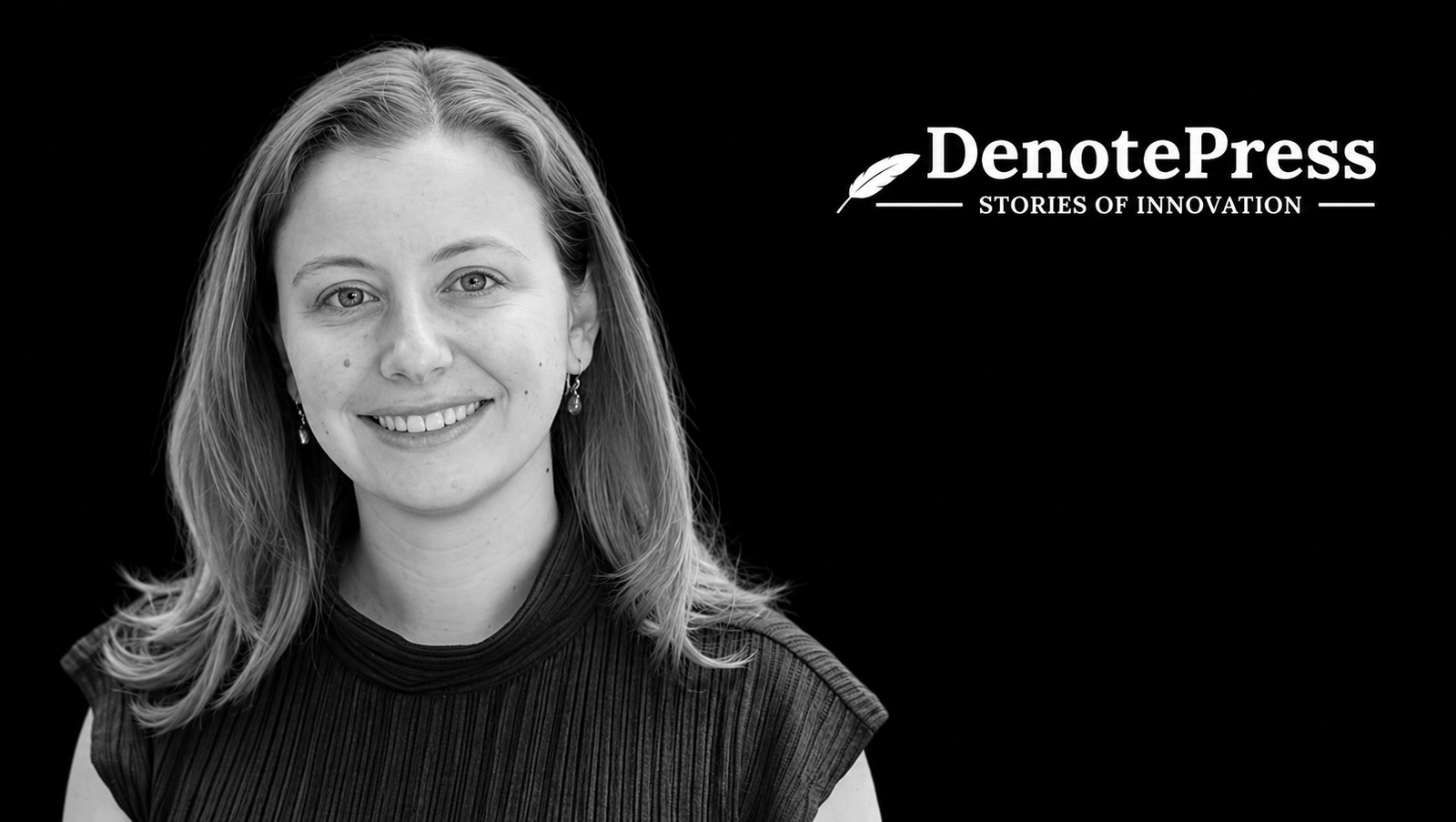
Nell Meosky Luo Folia Health is the story of a founder who watched her younger brother’s long search for a diagnosis and decided patients, not hospitals, should own the daily data that explains how they feel. Luo, the founder and CEO of Boston-based Folia Health, started the company with co-founder and CTO Dan Toffling. Folia’s free app lets people with chronic conditions log symptoms and treatments in about 90 seconds a day, and, if they choose, share de-identified data with researchers who pay the company to run studies. Folia announced a $10.5 million Series A led by S3 Ventures in October 2025, with Crosslink Capital and Create Health Ventures. The company says more than 30,000 people use the app, and a November 2025 trade article put the figure near 40,000. Most numbers come from the company itself. Here is how the idea took shape, how the model works, and what is still unproven.
Disclaimer: This article is based on public sources: Folia’s website, a company about page, press releases, and coverage from HIT Consultant, Clinical Research News, Neuro Rehab Times and Multiple Sclerosis News Today. Performance figures are company-reported unless stated otherwise. This is not medical or investment advice, and Denote Press has no commercial relationship with Folia Health.
Who Is the Founder Behind Nell Meosky Luo Folia Health?
Nell Meosky Luo is the founder and CEO of Folia Health. Rock Health, whose team page lists her, says she was a management consultant at Oliver Wyman before Folia, working on strategic transformation in healthcare and other sectors, and that she holds a bachelor’s degree from Yale in History of Science and Medicine and Public Health. Neuro Rehab Times adds that she has worked in the US healthcare system and, for a time, in the UK’s.
The Rock Health page also lists recognition: a 2018 Massachusetts Women in Digital Health award, membership of the governor’s Digital Health Council Working Group and Independent Steering Committee in 2019, and service on the Mass General Brigham COVID-19 Task Force. We read these from that page only and did not verify them elsewhere. The page does not give her years at Oliver Wyman.
Her personal motivation is consistent across sources. In a 2023 interview she explained that her younger brother has common variable immune deficiency (CVID) and that the family went through a long diagnostic process and a search for treatments suited to him. She said she was frustrated that care is built around standard approaches rather than individual needs. That story is the emotional core of the Nell Meosky Luo Folia Health narrative.
From a Family Illness to Home-Reported Outcomes
Folia’s company about page says its work began in 2016 and that the founders started it because their families found it very hard to get personalized, data-driven care. It gives a vivid detail: Luo realized the data she needed already existed in her mother’s knowledge, gathered over more than 20 years in many notebooks. From that, the page says, the team built a way for people to track symptoms and treatments and share the data with researchers. They also coined home-reported outcomes, or HROs, as a new category of health data.
The second founder came through an unusual search. According to the same page, Dan Toffling, father of a child with Down syndrome and a veteran of the agency and e-commerce world, joined after Luo advertised for a technical co-founder with firsthand experience managing a chronic condition. Clinical Research News says the company was founded nine years before its November 2025 article, which is consistent with 2016, though the 2023 interview dated the concept to about six years earlier. The company’s incorporation date is not stated in any source we opened.
One caution: the about page we read sits on a squarespace.com address, so it may be an older or staging copy of the company’s site. The story it tells is consistent with the main site and press, but the wording should be confirmed. The origin of Nell Meosky Luo Folia Health is thus a family problem, a notebook and a search for a technical partner with the same lived experience.
The Problem Folia Is Trying to Solve
Clinicians see patients for minutes at a time, and researchers rarely see what happens in the weeks between visits. For chronic and rare conditions, symptoms change day to day, and treatments work differently for different people. Luo told Neuro Rehab Times that human bodies are very complex and people do not react to things the same way.
The company’s website describes its product as a source of truth for your health, built from daily observations that are otherwise not captured. Folia’s answer is structured self-reporting: users answer questions they control, in yes or no, 0 to 5 scale, count or tag formats, in about 90 seconds a day.
There is also an incentive problem for research. Drug developers want patient-focused evidence, but recruiting and retaining patients through clinic-based studies is slow. Folia’s pitch, in its Inspire partnership release, is a fully remote model that needs no clinic visits or research sites. That is the problem Nell Meosky Luo Folia Health is built to solve.
Building Folia Health: A Free App Paid for by Research
Folia is a free mobile app for iOS and Android. Users build a tracker of symptoms, treatments and wellbeing, see trends in graphs and tables, and can generate a printable summary to take to a clinician, according to the 2023 interview and the company’s website. Questions are customizable, and the app can hold several conditions or several people in one account, which suits caregivers.
The business model is research. Luo said in 2023 that sponsors pay Folia to run studies and that users are paid to contribute data to studies they choose to join. The website describes paid research programs and a program called Data Dividends. Clinical Research News describes Data Dividends as monthly gift-card payments tied to self-reporting, paid as a revenue share even outside sponsored studies. Users consent to each study separately, the company says, and shared data is de-identified and aggregated.
Folia has also added products. Mosaic, which HIT Consultant reports alongside the Series A, is a community insights tool for sponsors, active for eczema and paroxysmal nocturnal hemoglobinuria (PNH), with lupus and sickle cell disease planned for 2026. The company says its platform complies with 21 CFR Part 11, which supports use in regulatory submissions, and that it exceeds HIPAA standards, which are company claims we did not verify. This pay-the-patient, pay-the-sponsor design is what Nell Meosky Luo Folia Health has built.
Traction and Customer Claims
Folia’s numbers come from the company. None was independently audited in the sources we reviewed.
| Claim | Figure | Source |
|---|---|---|
| App users | 30,000+ individuals | Folia website |
| App users | About 40,000 | Clinical Research News, November 2025 |
| Home-reported outcomes shared | 4.5 million | Folia website |
| Countries with app availability | Around 90 | Luo, Neuro Rehab Times, 2023 |
| Time to log | About 90 seconds a day | Folia website |
| First national study | Trikafta in cystic fibrosis, 2021, with the Cystic Fibrosis Foundation | Clinical Research News |
| Inspire reach | Over 10 million members in 3,000 disease areas | Inspire figures in the April 2025 release |
| Clients | Top 10 pharma, mid-market and biotech, academic and foundation partners | Clinical Research News |
The user counts need careful reading. The website says 30,000+ and the trade article about 40,000. The two may reflect different dates or definitions, such as registered users versus active ones. Neither says how many people actively log data, and the 4.5 million outcomes figure is not explained.
Named partners are few. The April 2025 announcement names Inspire, a patient community, as a partner for real-world evidence communities. The Series A release says Folia’s research-grade data has informed work in lupus, sickle cell disease, eczema and PNH, with active projects including rare kidney disease studies with a life sciences partner, a national Trikafta study and an app-based remote IgA nephropathy study. The pharmaceutical clients are not named. For Nell Meosky Luo Folia Health, the strongest proof is a repeat research business, and the weakest is the lack of named sponsors and published user retention.
The Funding Story and the Investors
The round that every source reports is the $10.5 million Series A announced October 1, 2025 from Boston. S3 Ventures, which HIT Consultant describes as a Texas-based venture firm, led the round. Crosslink Capital, described as a longtime partner, and Create Health Ventures, described as a specialist fund, also invested. Luo said in the release that the funding was an affirmation of the company’s dedication to patient-focused healthcare. HIT Consultant adds that it will expand the company’s patient-focused mission but gives no allocation.
No source we opened states total funding or describes earlier rounds. Crosslink’s description as a longtime partner suggests earlier investment, but we did not find the amounts. Folia’s own site does not list investors on the pages we read. A publisher should check Crunchbase and CB Insights, which appeared in search results but which we did not open.
The investor mix is notable. A Texas venture firm, a longtime partner in Crosslink Capital and a specialist fund in Create Health Ventures make up the cap table we can see. We found no commentary from S3 or Create Health on why they backed Folia, so we do not describe their thesis. The funding story of Nell Meosky Luo Folia Health is therefore a single reported round with an undisclosed history.
The Team
The company’s about page names two founders for Nell Meosky Luo Folia Health. Luo is founder and CEO and Dan Toffling is co-founder and CTO. Toffling’s background, as the page describes it, is the agency and e-commerce world, and he is the father of a child with Down syndrome. The page links to a separate team page that we did not open.
The 2023 Multiple Sclerosis News Today article quotes Connie Zhang as director of research programs, which indicates a dedicated research function. We could not find a headcount.
The advisory side is not described in the sources we opened. The team story of Nell Meosky Luo Folia Health is therefore clear on its founding pair, who both have family experience of chronic conditions, and thin on everyone else.
Where Folia Stands in the Market
Nell Meosky Luo Folia Health sits between patient communities, symptom-tracking apps and real-world evidence providers. CB Insights comparison pages for PatientsLikeMe and Symptify appeared in our search results, which suggests those are seen as peers, but we did not open them, so this article does not rank competitors.
Folia’s positioning is distinctive in three ways. It is free for users, it pays them through Data Dividends, and it frames its data as home-reported outcomes designed for clinical research. Clinical Research News says Folia collects these outcomes for late-stage Phase 3 trials and is a founding member of CancerX, a public-private initiative hosted by Moffitt Cancer Center that launched in early 2023. Partnerships such as Inspire’s, which connects over 10 million patients and caregivers, extend its reach.
The challenge is the usual one for patient-data companies: trust and scale. Users must believe their data is handled responsibly, sponsors must trust that self-reported data is reliable, and the company needs enough users per condition to be useful. For Nell Meosky Luo Folia Health, the market question is whether home-reported data becomes a standard part of drug development.
Risks and Open Questions
Company-reported scale. The 30,000+ and roughly 40,000 user figures and the 4.5 million outcomes are not independently verified, and active-user numbers are not given.
Data privacy and consent. Folia collects sensitive health information and pays users through Data Dividends, which raises fair questions about incentives and long-term data use. The company says consent is study by study, data is de-identified and aggregated, and it is not sold for marketing. We found no independent audit of these practices.
Self-reported data quality. Home-reported outcomes depend on what users choose to log. Sources do not discuss bias, missing data or validation against clinical records.
Unnamed sponsors. Clients are described as top 10 pharma and others, but none is named. Inspire and the Cystic Fibrosis Foundation are the named partners.
Unexplained funding history. Only the $10.5 million Series A is reported. Crosslink is a longtime partner, yet earlier rounds and total funding are not stated.
Founding date and site copies. The about page says work began in 2016, a trade article says nine years before November 2025, and the 2023 interview said about six years. The about page we read is on a squarespace.com address.
Thin leadership detail. Only the two founders are named in the sources we opened, and Toffling’s bio comes from the about page alone.
Name and details. The brand is Folia Health, and the app is often called Folia. None of these open items changes the core facts of Nell Meosky Luo Folia Health, but each should be confirmed before publication.
Leadership Style and What’s Next
The sources give only a partial view of how Luo leads, so this section sticks to her words. She describes the company as radically transparent about how it uses health information, according to Clinical Research News, and calls the funding an affirmation of the company’s fierce dedication to making patient-focused healthcare a reality. In 2023 she described the work as helping people capture their home-reported outcomes as actionable insights.
Her approach is patient-first in language and research-first in business, which is the clearest view of leadership in the Nell Meosky Luo Folia Health record. She has paired a free consumer app with a sponsor-funded research model, and added a revenue share for contributors. She also looks for lived experience in the team: her co-founder was recruited through a call for a technical partner who managed a chronic condition.
What comes next is partly set. Mosaic is live for eczema and PNH, with lupus and sickle cell disease planned for 2026, and the Series A release lists studies in rare kidney disease, cystic fibrosis, IgA nephropathy and sickle cell disease. An ISPOR Europe 2026 poster on the demographic diversity of participants in app-based studies also appeared in our search results, though we did not open it. Whether Folia publishes more outcomes and names more sponsors will show whether Nell Meosky Luo Folia Health becomes a standard in patient-driven research.
Lessons From the Nell Meosky Luo Folia Health Journey
1. Start from a family problem. Luo’s brother’s illness and her mother’s notebooks gave the company a concrete origin.
2. Recruit lived experience. Searching for a technical co-founder who also managed a chronic condition shaped the culture.
3. Give users something back. A free app plus Data Dividends makes patients participants, not just data sources.
4. Let sponsors fund the mission. Research clients pay, so users do not have to.
5. Be transparent about data. Consent per study and de-identified data are central to trust in this field.
6. Name your results. Without named sponsors or published retention, the strongest claims remain unproven for Nell Meosky Luo Folia Health.
Frequently Asked Questions
Who founded Folia Health? Nell Meosky Luo is founder and CEO, and Dan Toffling is co-founder and CTO, according to the company’s about page.
What does Nell Meosky Luo Folia Health do? Folia offers a free app for tracking symptoms and treatments, and pays users through Data Dividends when they choose to contribute de-identified data to sponsor-funded research studies.
What are home-reported outcomes? HROs are structured observations people log at home, such as symptoms, treatment use and wellbeing, which Folia says it pioneered as a new type of health data.
What is Nell Meosky Luo’s background? Rock Health’s page says she was a management consultant at Oliver Wyman and studied the history of science and medicine and public health at Yale. She says her brother’s illness inspired the company.
Where is Folia based? The company’s website lists Boston, Massachusetts, and its funding release carries a Boston dateline.
How much has Folia raised? It announced a $10.5 million Series A on October 1, 2025. No source states total funding or earlier rounds.
Who led the Series A? S3 Ventures led, with Crosslink Capital and Create Health Ventures.
How many people use Folia? The website says 30,000+ individuals and Clinical Research News reported about 40,000 in November 2025.
What is Mosaic? It is a community insights tool for sponsors, active for eczema and PNH, with lupus and sickle cell disease planned for 2026.
Who does Folia partner with? Sources name Inspire and the Cystic Fibrosis Foundation. The company says it works with top 10 pharma and other sponsors without naming them.
Is Folia free? The website says the app is free for users.
Conclusion
The Nell Meosky Luo Folia Health story is a bet that the daily observations of patients and caregivers can become a trusted source of care and research data, and that people should be paid when it is used. Luo moved from consulting to building the company around her family’s experience, she found a co-founder with similar experience, and a $10.5 million Series A led by S3 Ventures followed. The weak spots are visible too: company-reported user numbers, an undisclosed funding history, unnamed sponsors and open questions about data quality and privacy.
If you follow patient-driven research, Folia is worth watching, and its next named sponsors and published results will matter more than its next announcement. For more founder stories, browse the Founder Stories category.
