

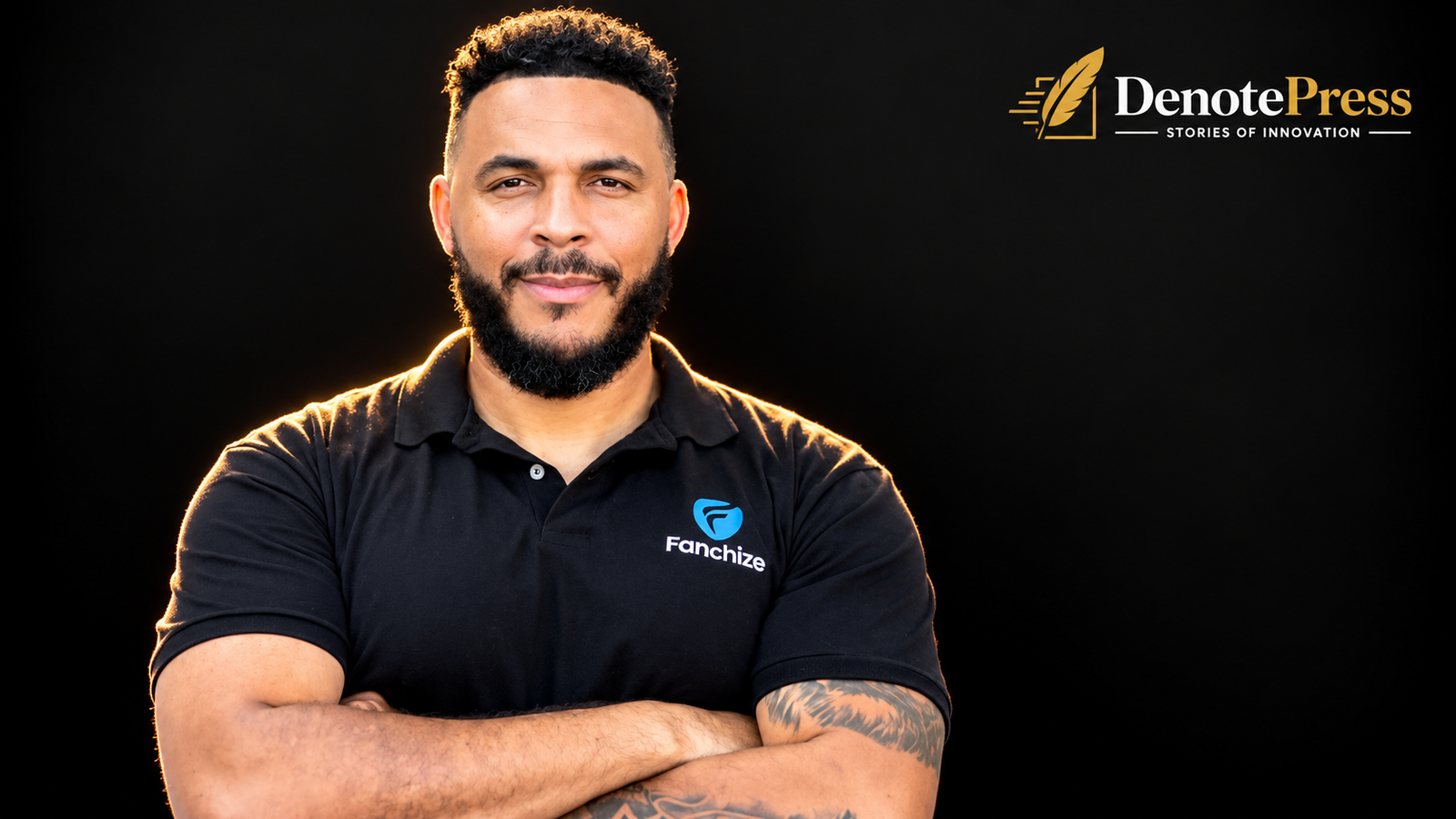
Jeff Holland Fanchize is the story of a Los Angeles entrepreneur who wants sports fans to be able to prove how loyal they are, the way a credit score proves how reliable a borrower is. Holland is the founder and CEO of Fanchize, an early-access platform where fans sign a Fan Loyalty Contract, earn a loyalty rating called a FanScore and, eventually, interact with athletes through NIL tools. The company’s website claims more than 700,000 fans on its waitlist, and a press release from earlier in 2026 cited 400,000. Here is how Holland got there, how the product works, what is known about its funding and what questions remain for an early-stage company.
This article is for information only and is not investment, legal or financial advice. Fanchize is an early-stage company, several features are labeled “coming soon,” and figures are reported by the company.
Jeff Holland Fanchize: Who Is the Founder?
Jeff Holland is the founder and chief executive officer of Fanchize, also written as Jeff Lucien Holland on LinkedIn and X. According to his Crunchbase profile, he is a serial entrepreneur based in Los Angeles who founded Fanchize, a fan economy platform that turns passive fandom into active participation through loyalty contracts, digital trophies, NIL monetization and gamified engagement. His LinkedIn page lists Georgia Institute of Technology as his school and Beverly Hills as his location.
The company’s own description calls Fanchize the first fan economy platform where loyalty is rewarded like performance. In a LinkedIn post, Holland said the idea is a model that rewards fans for what they already do and gives teams the real data they have been missing. That mix of recognition and data is the core of the Jeff Holland Fanchize story.
Fanchize is headquartered in Los Angeles, and Crunchbase lists a team of one to ten people. The company’s phone number, 1-855-Fanchiz, is on the website footer, along with social accounts on Facebook, X, LinkedIn, Instagram and TikTok.
A Serial Entrepreneur New to Tech
Holland does not have a traditional startup résumé. The Crunchbase biography says that while he is new to tech, he brings years of entrepreneurial execution, brand-building and community leadership, and that he is backed by an advisory team of startup operators, sports executives and marketing leaders. His LinkedIn headline describes him as an entrepreneur and innovator in sports, real estate and other fields.
His X bio is more informal: a business owner, technology entrepreneur and, in his words, a future icon from downtown Los Angeles. The account was created in 2012 and has posted about Fanchize since at least 2014.
That background shapes the company. Instead of an engineer’s product, Fanchize reads like a brand and community play, built around a catchy idea that fans can understand in one sentence. It also means the company has to prove it can build the technology. The entrepreneurial, brand-first background is the foundation of Jeff Holland Fanchize.
The 2014 Idea
One interesting detail is how long the idea has been around. A post on Holland’s X account from December 27, 2014 says he cannot wait to have full focus on #fanchize. Since the account’s content is brief and the early posts are limited, that tweet is the only public sign of timing, but it suggests the concept predates the current platform by more than a decade.
That is a long road for a startup idea. Many founders carry a concept for years before the technology, the market and the legal environment make it possible. In this case, the arrival of NIL rules for college athletes, which allowed athletes to be paid for their name, image and likeness, created a new reason for fans, athletes and brands to connect directly.
The 2014 tweet is a small clue, not a company history. It does show that Holland has been developing the Fanchize concept for much longer than the 2026 launch buzz suggests. That persistence is part of what makes Jeff Holland Fanchize a long-running project, not a sudden pivot.
The Problem: Loyalty With No Record
The problem Fanchize describes is simple. Fans have always shown up through wins, losses and rebuilds, but their loyalty has never been officially recorded or recognized. The company’s early access press release puts it this way: fans have never been officially recognized for that loyalty.
For teams and brands, there is a related gap. Follower counts and ticket sales say little about who the most committed fans are, and sponsors often struggle to know whether an athlete’s audience matches their market. On the athlete side, NIL valuations can feel opaque, with estimates driven by social media numbers rather than real production and fan behavior.
Fanchize’s pitch is to solve all three with one system: record fan loyalty, use that data to value athletes and give brands verified audiences. The idea is ambitious. The loyalty gap is the problem Jeff Holland Fanchize set out to address.
Building Fanchize: The Fan Loyalty Contract
The first building block is the contract. According to the homepage, fans sign a Fan Loyalty Contract, called a Fantract, pledging allegiance to their favorite teams and athletes. The site says the contract lives on record permanently and that fans are recognized by players and teams.
Crunchbase describes the Fantracts as multi-year loyalty contracts with favorite teams, tied to digital trophies and physical rings when those teams win. The company’s pitch to early adopters is specific: the first 5,000 fans to sign a Loyalty Contract are eligible to earn an official Championship Ring if their team wins it all, according to the website.
Joining is free, and the site says no credit card is required. The sign-up form asks for a favorite team and sport, with options including the NFL, NBA, MLB, soccer, MLS, NHL, racing, college football and basketball, cricket and the WNBA. The contract is the identity layer of Jeff Holland Fanchize, and it is also the data collection point for everything else.
FanScore: A Credit Score for Fandom
The second building block is the rating. The FanScore page describes it as a living score that tracks loyalty, investment and commitment over time. The company’s press release compares it to a credit score for fan loyalty.
The scoring has tiers. The site lists Fanchize Hall of Fame at 800 to 850, All-Star Status at 750 to 799 and Rising Star at 700 to 749, with lower tiers below, each unlocking perks such as priority access, early drops and premium reward eligibility. The score is built from weighted categories. Financial Engagement, which covers regular purchases of tickets, merchandise and digital collectibles, carries 30% of the weight for up to 255 points. Contract Loyalty and Retention, covering the length and completion of contracts and renewals, carries 25% for up to 212 points. A Social, Brand Engagement and Advocacy category follows, and the site lists penalties for actions such as breaking a contract early or failing to honor NIL support commitments.
The design raises a fair question. A score that weights spending at 30% rewards fans who can afford to buy more, which may not match a purist’s idea of loyalty. How the weights evolve will matter. The scoring model is the intellectual property behind Jeff Holland Fanchize.
Digital Assets, Rings and Fanplace
Beyond scores, the platform includes collectibles and commerce. The homepage describes digital assets as unique collectibles tied to real moments in a team’s history that fans can collect, trade and display. The company also mentions digital jersey assets and a jersey customization feature, and the footer links to a store.
Crunchbase lists a marketplace called Fanplace, VIP fan tiers and NIL-powered perks. Together these blend social media, collectibles, commerce and NIL monetization into a single platform, in the company’s words.
This is a crowded area. Digital collectibles had a boom and a bust earlier in the decade, and fans are cautious about products that look like speculative assets. Fanchize frames its assets as recognition and identity rather than investments, but the company has not published detail about licensing arrangements with teams or leagues. The assets and rings are the reward layer of Jeff Holland Fanchize.
NIL Valuation for Athletes
The platform also includes a tool for athletes. According to the Fanchize website, athletes can confirm their profile, unlock an NIL valuation, see fan demographics and track career milestones. The company says its valuation is grounded in real production, real comps and real-time data and is meant to replace judging athletes by follower counts.
NIL, short for name, image and likeness, became central to college sports after rule changes allowed athletes to earn money from endorsements. Valuing an athlete’s NIL is hard because comparable deals are rarely public. A transparent, data-based valuation would be useful if it can be shown to be accurate.
The site also describes a “fan-driven signing week,” where fans vote and athletes respond during a team’s recruiting cycle. Details on how this would fit within NCAA and state rules are not published, so readers should treat it as a concept, and compliance rules for NIL differ by sport, school and state. The NIL tools are the athlete-facing side of Jeff Holland Fanchize.
The Verified Fan Network and Brands
For brands and vendors, Fanchize proposes a Fanchize Verified Fan Network. The homepage describes a community of authenticated, passionate fans who earn exclusive access and rewards. Brands can access verified fan data, match athletes to their audience, run fan-driven NIL deals, use fantasy integration tools and track real-time campaign impact.
The business logic is a three-sided marketplace. Fans provide data and attention, athletes provide association and brands provide money. If the data is genuinely verified, it could be more valuable than typical social media metrics because it ties audience members to actual loyalty behavior.
The risks are familiar. A data business must navigate privacy rules and user trust, and brands will only pay if the verified audience delivers results. The company’s privacy and terms pages exist on the site, though their details are beyond the scope of this article. The network is the revenue model behind Jeff Holland Fanchize.
The Waitlist: From 265,000 to 700,000
The most visible number is the waitlist. Crunchbase’s company description, apparently written earlier, cites more than 265,000 pre-registrations. The early access press release, distributed through OpenPR, says that over 400,000 fans were on the waitlist when early access opened. By the time of the current homepage, the figure is 700,000-plus.
The growth is striking, but a waitlist is not an active user base. People sign up for free with an email and a favorite team, and there is no public data on how many have actually signed contracts, earned scores or spent money. The homepage’s “Get Early Access” and “coming soon” labels suggest the full product is not yet open to everyone.
Still, a large waitlist is an asset. It gives the company a base to convert, a story for partners and evidence that the idea resonates. The company also lists partnerships with groups such as Getty Images in its Crunchbase description. The waitlist is the early demand signal behind Jeff Holland Fanchize.
Funding: The Raise Target and Valuation Claim
The funding picture is the least clear part. Crunchbase marks Fanchize as seed stage with a funding round of undisclosed date and amount, and lists no named investors. The person profile for Holland says he is currently raising a $10 million seed round at a $58 million valuation, with a public launch targeted for the second quarter of 2026. The company description adds that the $58 million figure is a pre-money valuation from a third-party valuation firm, the second one it has commissioned.
Those statements need careful reading. A raise target is not a closed round, and a third-party valuation report is not the same as a price set by investors. In the sources reviewed, no investor, lead or closing amount was announced, and no press report confirmed that the $10 million had been raised. The public launch target of the second quarter of 2026 has also passed, and the website still shows early access.
For comparison, other fan-economy startups have announced specific rounds, such as Fanstake’s multi-million seed. For more on how funding rounds shape young companies, see our Funding News section. Until Fanchize discloses a round, the honest description of the finances is early stage and largely unannounced. That is the current state of the Jeff Holland Fanchize funding story.
Advisors and Partners
Holland has said the company is backed by a senior advisory team of seasoned startup operators, sports executives and marketing leaders, according to Crunchbase. The sources reviewed do not name them. The company’s description also lists a Getty Images partnership, though without detail about what it covers.
Public appearances give some visibility. In 2026, Holland spoke at the PEAK conference, where Scott Garber of Profluence Sports interviewed him about a model for fan engagement that rewards fans for what they already do. He also appeared on the Constant Sports Podcast with host Conner Schenk to discuss how technology could reshape the relationship between teams and fans.
The named backers and advisors would help investors and partners judge the company. Publishing them would strengthen Jeff Holland Fanchize’s credibility in a field where claims are easy to make.
Where Fanchize Stands in the Market
Fan engagement and NIL tech are active categories. Several companies approach the fan relationship from different angles. Fanstake, for example, lets fans pool money to support college athletes’ NIL deals and raised a $3 million pre-seed in 2024 led by Susa Ventures and Will Ventures, per Axios Pro. Legion M pioneered fan ownership in entertainment, letting fans invest in films and TV. Teams and leagues also run their own loyalty programs and apps.
Fanchize’s differentiator is the combination: a loyalty contract, a credit-score-style rating, collectibles, athlete valuation and brand data in one system. It also leans on a memorable brand and a very large waitlist.
The risks are significant. Licensing from teams and leagues is difficult and expensive. NIL rules are changing quickly. A score that mixes spending and engagement could face criticism. Platforms with many features risk doing none of them well. And converting a free waitlist into paying users is uncertain. In a crowded field, Jeff Holland Fanchize competes on a clear concept and early demand.
Risks and Open Questions
A fair article on an early-stage company should name the open questions.
Product availability. The site promotes early access and marks athlete interaction as coming soon, so it is unclear which features are live.
Licensing. Using team names, logos and jerseys usually requires licenses, and the sources reviewed do not describe any agreements beyond the Getty Images mention.
Funding. There is no public confirmation of a closed round, and the valuation claim is self-reported.
User numbers. The waitlist figure has changed across sources, and the number of active users is not published.
Regulation. NIL, collectibles and data privacy are all regulated areas, and rules vary by state and sport.
None of these are unusual for a young company, but readers should weigh them before drawing conclusions. Naming the unknowns is part of an honest look at Jeff Holland Fanchize.
Leadership Style and What’s Next
Holland comes across as a promoter and community builder. His public posts and interviews focus on the vision of recognizing fans, and his social media style is energetic. The company’s slogans, such as “Train Hard, Play Hard and Fan Hard,” reflect the same tone.
The roadmap on the website points to the launch of the app, the rollout of contracts and scores, athlete interaction features and brand tools. The test will be turning attention into a working product with real usage. Holland has also said he is surrounding himself with advisors where he lacks experience, which is a sensible approach for a founder new to tech. That discipline will define the next chapter of Jeff Holland Fanchize.
Lessons From the Jeff Holland Fanchize Journey
The Jeff Holland Fanchize journey offers five practical lessons for founders.
First, a simple idea travels. “A credit score for fan loyalty” is easy to explain, which helps build a waitlist.
Second, long-held ideas can find their moment. A concept mentioned in 2014 became more relevant when NIL rules changed the sports landscape.
Third, a waitlist is a start, not a business. Converting free sign-ups into engaged, paying users is the real challenge.
Fourth, be clear about what is live. Early-access language and “coming soon” labels protect credibility.
Fifth, publish proof for big claims. Named investors, partners and advisors turn claims about valuation and traction into evidence.
Frequently Asked Questions
Who is Jeff Holland?
Jeff Holland, also known as Jeff Lucien Holland, is the founder and CEO of Fanchize. He is a Los Angeles entrepreneur and a Georgia Tech alumnus.
What is the Jeff Holland Fanchize story?
It is the story of a serial entrepreneur who built a sports fan platform around loyalty contracts and a FanScore rating, gathered a waitlist the company puts at more than 700,000 and is still in early access.
What is Fanchize?
Fanchize is a Los Angeles sports-tech platform where fans sign Fan Loyalty Contracts, earn a FanScore, collect digital assets and, eventually, interact with athletes, while athletes get NIL valuations and brands get fan data.
What is a FanScore?
FanScore is the platform’s loyalty rating, compared by the company to a credit score. Tiers range from Rising Star at 700 to 749 up to Hall of Fame at 800 to 850.
What is a Fan Loyalty Contract?
Also called a Fantract, it is a pledge fans sign to support their favorite teams and athletes, which the company says is recorded permanently on the platform.
How much funding has Fanchize raised?
No closed round has been publicly announced in the sources reviewed. Holland’s Crunchbase profile says he is raising a $10 million seed round at a $58 million valuation, which is a target, not a completed raise.
How big is the Fanchize waitlist?
The website claims more than 700,000 fans, while earlier sources cited 400,000 and 265,000. A waitlist is not the same as active users.
Is Fanchize free?
The website says joining is free and requires no credit card. Digital assets and store items may cost money.
What is the NIL valuation tool?
It is a tool for athletes that the company says uses real production, comps and real-time data to estimate an athlete’s name, image and likeness value.
Where is Fanchize based?
The company is based in Los Angeles, California.
Conclusion
Jeff Holland Fanchize shows how a simple, memorable idea can gather attention long before a product is fully built. By proposing that fans sign loyalty contracts, earn a score and be recognized by athletes and brands, Holland assembled a large waitlist and a brand that sports fans can understand in a sentence. The open questions are the ones every early-stage company faces: whether the product works at scale, whether licensing and funding come through and whether free sign-ups become active users. If they do, Fanchize may give fans something they have never had, an official record of their loyalty.
For more founder journeys in sports and consumer platforms, see Marcos del Pilar’s Pro Padel League, Jen Phan’s Passionfroot and Dorsia’s Series A on Denote Press, or browse all Founder Stories.
