

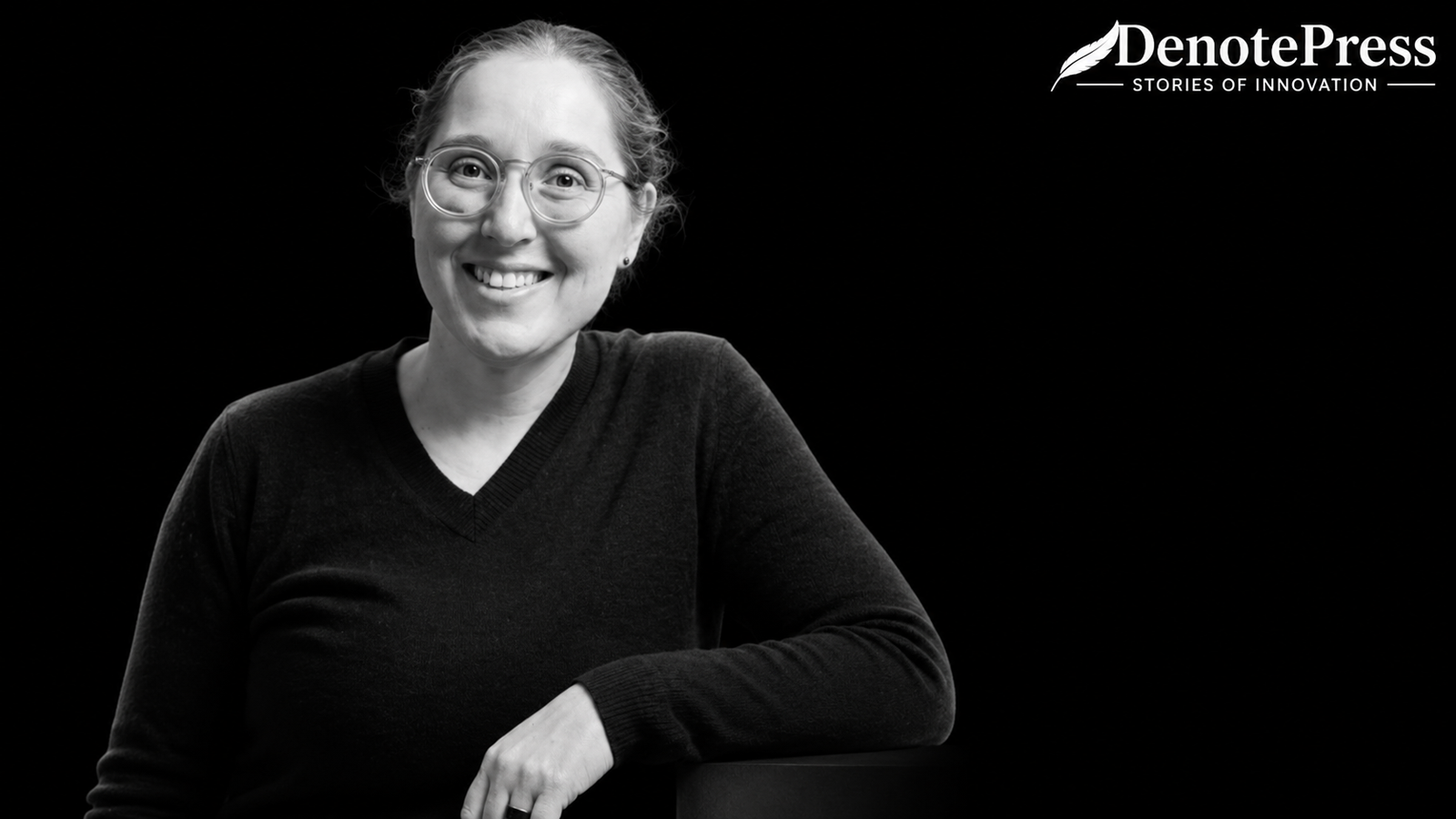
Yael Katz BrainCheck is the story of a computational neuroscientist who left the tech world to build a way for doctors to catch memory problems earlier. Katz co-founded BrainCheck with Stanford neuroscientist David Eagleman and ran it as CEO through its early years. Today the Austin-based company, now led by CEO Chris Loughlin, offers an FDA Class II digital cognitive assessment and says more than 500 healthcare organizations use its platform. In February 2026, it announced a $13 million round led by Next Coast Ventures. Here is how Katz and Eagleman got there, how the technology works, who backs it and what remains unproven.
Yael Katz BrainCheck: Who Is the Founder?
Dr. Yael Katz is a co-founder of BrainCheck. According to a Rice University profile, she is a Northwestern- and Princeton-trained neuroscientist with an analytics background who consulted for biotech and pharma companies and was an early team member at the New York technology company JW Player. Another interview describes her as having a Ph.D. in biological sciences with a focus on computational and experimental neuroscience.
In an S3 Ventures founder Q&A, Katz said she is an entrepreneurial person who was looking for a problem a computational neuroscientist could solve. New research suggested that cognitive decline could be slowed with early detection and management, and she began exploring that thesis. She was the company’s CEO until a new chief executive was named in 2023, and she later sat on its board. That scientist-turned-founder path is the core of the Yael Katz BrainCheck story.
From a Baylor Lab to a Startup
Katz did not start alone. In the S3 Q&A, she said she was fortunate to connect with Dr. David Eagleman, a neuroscientist at Baylor College of Medicine in Houston. A Pulse 2.0 report says BrainCheck was conceptualized at the Eagleman Neuroscience Laboratory, and Eagleman is now at Stanford.
Katz said the team launched in Houston, home of the Texas Medical Center, which was a good place to network with the medical community. Some of her neighbors wrote the first checks, she said, and people were willing to take a gamble on the idea stage. The company later graduated from the DreamIt Ventures accelerator in 2016, according to PitchBook.
The founding date varies by source. Most press releases, including the company’s exec team announcement, say 2015, while TechCrunch’s 2016 report and some data sites say 2014. The earlier year may reflect when the lab work began. That origin is the heart of Yael Katz BrainCheck.
The Problem: Cognitive Impairment Goes Unrecognized
The company’s central argument is a diagnosis gap. According to its homepage, about 17 percent of adults age 65 and older have mild cognitive impairment and about 13 percent have dementia, but Medicare claims data show far lower rates of documented cognitive diagnoses. The site cites a peer-reviewed analysis of expected versus diagnosed rates in the Medicare population.
The company is careful to add that prevalence estimates are not diagnostic and do not mean any individual should receive a diagnosis. The practical problem is time. Primary care clinicians have short visits, paper tests are subjective and specialist appointments can take months. One neurologist on the company’s site says patients in Alabama may wait a year for a specialist.
That gap between impairment and documentation is what Yael Katz BrainCheck was built to close.
Building BrainCheck: From Concussions to Dementia
BrainCheck did not start with dementia. In October 2016, TechCrunch reported a $3 million seed round for an iPad app that adapted standard neuropsychological assessments into interactive games to help detect concussion. Katz and Eagleman said they would invest in the mobile platform rather than new hardware such as virtual reality.
The strategy then shifted toward cognitive care. A later funding announcement described the company as bringing artificial intelligence and personalized medicine to dementia care through a cognitive care management product. Katz said the company’s dataset on cognitive health, combined with other health data, could personalize dementia care at scale.
By 2022, she told S3 Ventures that the company aimed to be in every doctor’s office within five years, with BrainCheck as the standard of cognitive care. The move from concussion to dementia is the strategic backbone of Yael Katz BrainCheck.
How BrainCheck Works
The platform has several parts, according to the company’s platform page and homepage:
- BrainCheck Assess is a 15-minute assessment across five cognitive domains. It is the platform’s flagship and the only FDA-registered Class II component.
- Screening and clinical tools: the platform offers around 30 clinical evaluation tools, including validated screeners and surveys.
- Care Planning: tools that help clinicians build follow-up plans.
- Population Analytics: a registry view of a practice’s older patients, launched in July 2026.
The company says the system supports EHR integration, naming Epic and athenahealth on its homepage, and that it adds features roughly every two weeks. Its security and compliance page covers its certifications, and a January 2026 announcement said it achieved HITRUST i1 certification. The company’s disclaimer notes that Assess is not meant to be a stand-alone diagnostic device. That product design is the technical backbone of Yael Katz BrainCheck.
The Clinical Evidence
Evidence is the company’s selling point. The homepage says published research shows BrainCheck Assess scores correlate with the Montreal Cognitive Assessment, or MoCA, at 0.77, and that peer-reviewed studies show it can distinguish normal cognition, mild cognitive impairment and dementia with high sensitivity and specificity.
The underlying papers are public. A 2022 JMIR Aging validation study tested a computerized battery for detecting dementia and mild cognitive impairment, a 2019 JMIR Aging cohort study examined an earlier rapid mobile screening test, and a 2024 Frontiers in Psychology paper compared BrainCheck Assess with the MoCA. The company’s science page collects its research, and an April 2025 company announcement said new studies brought it to 28 peer-reviewed publications.
Several of these papers have company-affiliated authors, so they are not fully independent. A European study, PREDICTOM, is also using the platform, according to company announcements. The evidence base supports Yael Katz BrainCheck, though independent replication matters.
The Funding Story: Seed to $13 Million
BrainCheck’s funding came in stages, and the round names are confusing, so this article uses dates.
- October 2016: a $3 million seed round, per TechCrunch.
- Early rounds: a $1.5 million round led by True Wealth Ventures, which a press release said brought total funding to $6 million. Sources do not agree on the year, with PitchBook dating a True Wealth investment to 2017.
- October 2019: an $8 million Series A, according to VCNewsDaily, with Nueterra Capital, S3 Ventures, Tensility Venture Partners and True Wealth.
- November 2021: a $10 million Series B led by Next Coast Ventures and S3 Ventures, with strategic investors UPMC Enterprises and SelectQuote, according to Business Wire.
- March 2024: a $15 million round led by Next Coast Ventures, S3 Ventures and UPMC Enterprises, reported by MobiHealthNews.
- February 26, 2026: a $13 million round, which the company’s announcement calls an additional $13 million in Series A financing, led by Next Coast Ventures with S3 Ventures and UPMC Enterprises.
The labels do not line up. The 2019 round was called a Series A and the 2021 round a Series B, yet the 2026 release uses Series A again, so treat the labels as the company’s wording. The money will support deeper workflow integration, longitudinal patient monitoring, population-scale deployment and AI-assisted tools for risk-bearing and value-based environments, per the announcement. For more on how rounds like this shape startups, see our Funding News section. The funding history is the financial backbone of Yael Katz BrainCheck.
The Investors Behind BrainCheck
Three repeat backers show up in the largest rounds. Next Coast Ventures, whose co-founder Mike Smerklo sits on BrainCheck’s board, led the 2021, 2024 and 2026 rounds. S3 Ventures, a Texas-focused firm, joined each of them. UPMC Enterprises, the innovation and venture arm of the UPMC health system, is both an investor and a clinical evaluator.
In the 2026 announcement, UPMC’s Dr. Adele Towers said UPMC clinicians have evaluated BrainCheck for several years and seen how standardized digital cognitive assessment can support real-world practice. The company’s leadership page also lists Tensility Venture Partners and True Wealth Ventures among its investors. UPMC Enterprises’ Nicholas Shapiro joined the board in 2024. That investor group supports Yael Katz BrainCheck, but a strategic health system investor can also shape who counts as a customer.
Leadership Changes
The company has had several chief executives since its founders. Katz was CEO through the early years, and in March 2023 BrainCheck appointed Kim Rodriguez, a medical device executive. According to the company’s leadership page, Chris Loughlin joined as CEO in October 2024. He previously led Digital Pharmacist and Travelzoo and was managing partner at Pixiu Investments, and he cites a family history of Alzheimer’s disease as a personal motivation.
Since then the company has added a president, Steve Wardle, in July 2025, and a chief medical officer, Dr. Stephen Bekanich, in March 2026. Both were part of the team behind Iris Healthcare, which was acquired by Aledade. The early timeline of Katz’s departure from the CEO role is not detailed in the sources reviewed. The leadership bench shows how Yael Katz BrainCheck evolved from a founder-led startup into a commercial company.
Customers and Traction
The company reports large adoption figures. The February 2026 announcement says more than 500 healthcare organizations use BrainCheck, including Bon Secours, UPMC and Springfield Clinic, along with 46 research hospitals. Clinicians have completed over 640,000 assessments with BrainCheck Assess and 14,000 care plans.
Earlier figures show the growth. In March 2023, the company said it had raised $21 million to date and that 1,200 providers in over 400 primary care and neurology practices used it for more than 150,000 patients. Company news headlines say 240 more clinics adopted it in 2024 and 150 more practices joined in 2025.
The homepage lists institutions including Cleveland Clinic, Stanford, MD Anderson, Mount Sinai and UPMC as places whose clinicians and researchers use the platform. That is not the same as enterprise contracts, and the company’s case studies show specific deployments. Named testimonials come from Capital Medical Clinic, Frontier Psychiatry and Bon Secours, among others. Traction is the headline claim of Yael Katz BrainCheck.
Where BrainCheck Stands in Digital Health
Digital cognitive testing is a growing field. Traditional pencil-and-paper tests such as the MoCA are cheap but subjective and time-consuming, while digital tools offer repeatability, data and integration. The company argues that blood-based biomarkers and new Alzheimer’s therapies make an objective starting point more important.
Its differentiators are regulatory clearance for Assess, a large normative and real-world dataset, EHR integration and an expanding care planning layer. The homepage says its normative database covers more than 5,000 patients and its real-world dataset covers more than 450,000 assessments. The company also works with collaborative care organizations to deliver cognitive care in practices that lack staff, which moves it beyond software.
For other founders working on aging and health, see our stories on Sunbound Senior Living and Lava Sunder’s Corner Health. In a field with several digital cognitive vendors, Yael Katz BrainCheck competes on evidence and workflow.
Risks and Open Questions
A fair article should name the open questions.
Company-reported numbers. The 500 organizations, 640,000 assessments and 14,000 care plans figures come from the company, and the homepage cites 450,000 assessments in a separate dataset, so check which applies.
Funding labels. The 2019, 2021, 2024 and 2026 rounds use inconsistent naming, and some data sites list different totals.
Reimbursement and adoption. Practices need clear billing pathways and workflow time for cognitive assessment to become routine.
Clinical role. The product supports clinicians and is not a stand-alone diagnosis, which limits how it can be marketed.
Evidence independence. Many studies involve company-affiliated authors.
Founder transition. The sources reviewed do not explain why leadership changed from the founders to later CEOs.
Competition. Other digital cognitive assessment vendors and EHR-native tools may target the same practices.
None of these is unusual for a company at this stage. Naming them is part of an honest look at Yael Katz BrainCheck.
Leadership Style and What’s Next
Katz’s public statements, in the S3 interview, are practical and clinician-centered. She credited mentors who taught her term sheets and finance, and said working with doctors taught her to keep problems in perspective. The company today stresses that AI should assist, never replace, clinical decision-making, a line Loughlin used in the 2026 announcement.
The visible roadmap includes population analytics, enterprise deployments with accountable care organizations and value-based care groups, longitudinal monitoring and AI-assisted tools. The company also announced a BARDA-supported award for traumatic brain injury solutions in November 2026, a return to its concussion roots, and an NIH SBIR grant for an eConsult platform in December 2025. The test is whether standardized digital assessment becomes routine in primary care. That discipline will define the next chapter of Yael Katz BrainCheck.
Lessons From the Yael Katz BrainCheck Journey
The Yael Katz BrainCheck journey offers five practical lessons for founders.
First, pair science with commercial skill. A neuroscientist and a data-driven operator turned lab research into a product.
Second, be willing to change the market. BrainCheck began with concussions and found its larger opportunity in cognitive care.
Third, build evidence early. Peer-reviewed studies helped a software company earn trust from clinicians.
Fourth, find strategic investors. UPMC Enterprises is both a backer and a real-world test environment.
Fifth, know when to bring in new leadership. The company added operators as it scaled beyond its founders.
Frequently Asked Questions
Who is Yael Katz?
Dr. Yael Katz is a co-founder of BrainCheck. She is a computational neuroscientist who led the company as CEO in its early years.
What is the Yael Katz BrainCheck story?
It is the story of a neuroscientist who partnered with David Eagleman to turn a Baylor College of Medicine lab idea into a digital cognitive assessment and care platform.
What is BrainCheck?
BrainCheck is a digital platform for cognitive assessment and care, anchored by BrainCheck Assess, an FDA Class II digital cognitive assessment.
Who founded BrainCheck?
Dr. Yael Katz and Dr. David Eagleman founded BrainCheck. Sources date the founding to 2014 or 2015.
Who is BrainCheck’s CEO now?
Chris Loughlin joined as CEO in October 2024, according to the company.
How much funding has BrainCheck raised?
The most recent round was $13 million, announced February 26, 2026. Earlier rounds include a $15 million round in March 2024 and a $10 million Series B in 2021.
Who invests in BrainCheck?
Next Coast Ventures, S3 Ventures and UPMC Enterprises led recent rounds, with earlier backing from Tensility Venture Partners, True Wealth Ventures, Nueterra Capital and SelectQuote.
Does BrainCheck diagnose dementia?
No. The company says BrainCheck Assess is not intended to be used as a stand-alone diagnostic device and should be interpreted by qualified healthcare professionals.
How long does BrainCheck Assess take?
The company says it takes about 15 minutes and covers five cognitive domains.
How many organizations use BrainCheck?
The company says more than 500 healthcare organizations use it.
Conclusion
Yael Katz BrainCheck shows how a scientist’s research can become a clinical platform. Starting from a Baylor lab and a concussion app, Katz and Eagleman built a digital cognitive assessment that the company says is used by more than 500 organizations and backed by peer-reviewed studies and repeat investors. The open questions are whether the reported traction holds up, whether reimbursement supports routine screening and how the company fares against other digital cognitive tools. If they do, BrainCheck could help make cognitive assessment as ordinary as a blood pressure check.
