

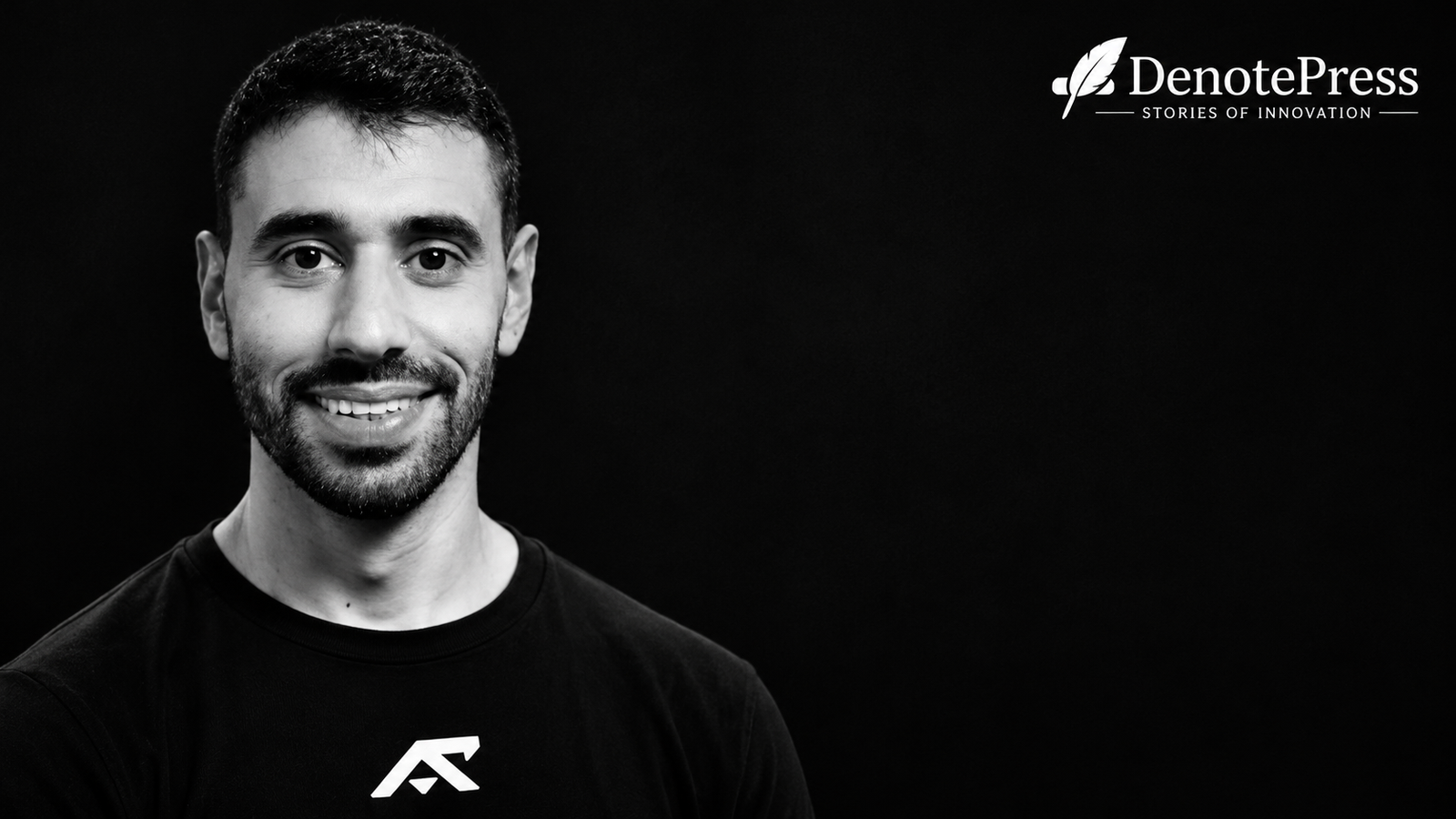
Tal Baron Arrakis Security is a founder story built on a specific, timely gap: enterprises are deploying autonomous AI agents faster than their security teams can figure out what those agents are actually doing. Baron is the co-founder and CEO of Arrakis Security, an Israeli cybersecurity startup building a platform that discovers, profiles, and governs the behavior of AI agents operating inside enterprise systems. In late July 2026, Arrakis Security closed an $8 million seed round led by Hetz Ventures, with backing from a notably senior group of individual investors, including ElevenLabs CEO Mati Staniszewski.
Here is how a team of cybersecurity veterans from Torq and Palantir is trying to build the governance layer that traditional security tools were never designed to provide.
A quick note on the name: there is at least one other, entirely unrelated company also operating under the “Arrakis Security” name, plus a separate, differently focused company called simply “Arrakis” building industrial AI software in London and Paris. This article is specifically about Tal Baron’s Israeli cybersecurity company, whose official site is arrakis.security.
Who Is Tal Baron?
Tal Baron is the co-founder and CEO of Arrakis Security, according to CTech and Dealroom’s coverage of the company’s seed funding round. He co-founded the company alongside Omer Efrat and Ron Shani, both described consistently across coverage of the round as veterans of Torq, the cybersecurity automation company, and Palantir, the data analytics and software firm.
Beyond that, Baron’s specific prior roles and educational background are not extensively documented in publicly available coverage of the company, worth noting plainly rather than guessing at specifics that haven’t been independently confirmed. What is clear is that the founding team’s combined experience at Torq and Palantir, two companies operating at very different ends of the security and data analytics spectrum, directly shaped Arrakis Security’s core thesis about what traditional security tooling gets wrong about autonomous AI systems.
The Problem Arrakis Security Set Out to Solve
Baron has framed the core problem directly. “You cannot secure a machine that thinks and operates differently from humans using security tools that were designed to monitor humans interacting with machines,” he said. “Organizations are rapidly deploying AI agents that access CRMs, process financial data, execute workflows and make decisions autonomously, yet in most cases they have no way to understand what those agents are actually doing.”
Arrakis Security describes this gap as a “visibility illusion”: companies often know an AI agent exists and is connected to a given system, but lack meaningful detail about what it’s actually doing, which permissions it’s using, whether its behavior complies with company policy, and when normal activity crosses into genuine risk. That gap widens as AI agents increasingly operate continuously, access multiple applications simultaneously, and execute actions at a speed no human employee could match.
Building Arrakis Security: Discovering and Governing AI Agents
Arrakis Security’s platform is designed to automatically discover AI agents operating across an organization’s SaaS applications, cloud infrastructure, and endpoints, then build behavioral baselines for each agent and monitor activity in real time for deviations from expected patterns. Rather than focusing security efforts only on the point where an agent enters a system, the platform treats the agent itself, its workflow, and the surrounding software ecosystem as the fundamental unit it needs to govern.
The company’s capabilities include pre-execution static analysis, policy enforcement at the point where agents connect to other tools, and correlation with established security frameworks including OWASP, NIST, and MITRE ATLAS. To support that work, Arrakis Security has established Arrakis Labs, a research team made up of former Microsoft security researchers and veterans of leading Israeli technology units, which publishes findings on real-world AI agent attacks and emerging threat vectors.
Inside Arrakis Security’s $8 Million Seed Round
Arrakis Security announced an $8 million seed round in late July 2026, led by Hetz Ventures. The round’s individual investors carry unusual weight for a seed-stage company: Mati Staniszewski, CEO of ElevenLabs; Ofer Smadari, CEO of Torq; Amitai Ratzzon, founder and CEO of Pentera; and several senior Palantir executives all participated personally.
The company, which employs around 20 people, says it will use the new funding to expand its research, development, and product teams in Israel, strengthen its detection and response capabilities, and accelerate deployments among organizations adopting AI agents at scale.
The Investors Backing Tal Baron
The specific composition of Arrakis Security’s investor list is arguably as newsworthy as the funding amount itself. Having the CEOs of ElevenLabs, Torq, and Pentera personally write checks, alongside multiple senior Palantir executives, signals a level of direct operator conviction that’s uncommon even among well-regarded seed rounds, particularly given that Torq and Palantir are the exact two companies Baron and his co-founders came from.
That pattern, senior executives from a founder’s own former employers personally investing in their new venture, suggests those individuals had direct, credible visibility into the founding team’s capabilities well before Arrakis Security’s public fundraising process began.
Arrakis Security’s Position in the AI Agent Governance Race
Arrakis Security enters a rapidly forming category focused specifically on AI agent security and governance, distinct from both traditional endpoint security vendors and newer AI model safety companies. Its differentiation is treating the agent’s full behavioral footprint, spanning SaaS applications, cloud infrastructure, and cross-agent interactions, as the object it governs, rather than securing only the initial access point where an agent connects to a system.
That positioning matters given how fast the underlying problem is scaling: as enterprises move from experimenting with individual AI agents toward deploying fleets of them across CRMs, financial systems, and internal workflows, the security gap Arrakis Security is targeting becomes proportionally larger rather than shrinking as the technology matures.
What’s Next for Arrakis Security
With fresh seed capital, Arrakis Security’s near-term priorities center on expanding its research, development, and product teams in Israel, deepening its detection and response capabilities, and accelerating enterprise deployments as more organizations adopt AI agents into core business workflows. The continued output of Arrakis Labs’ research, published as what the company calls the Arrakis Chronicles, suggests a strategy of building public credibility through original threat research alongside its commercial product.
The company’s specific focus on Israel-based research and development, even as its target customers are global enterprises adopting AI agents, reflects a common pattern among Israeli cybersecurity startups building deeply technical security infrastructure for an international market.
Lessons for Entrepreneurs From Tal Baron’s Journey
Baron’s path offers a few clear lessons for founders building security infrastructure for an entirely new category of technology risk. First, recruiting co-founders with complementary backgrounds, Torq’s automation and workflow expertise paired with Palantir’s data analytics depth, gave Arrakis Security technical range that a single-background founding team might lack when tackling a problem as broad as agent behavior across an entire enterprise software stack. Second, the willingness of senior executives from the founders’ own former employers to personally invest suggests that building genuine trust and credibility with former colleagues and leadership, well before founding a company, can translate directly into a stronger seed round.
Third, establishing Arrakis Labs as a dedicated research arm publishing original findings, rather than treating research purely as an internal product development function, gives the company a public-facing credibility asset that pure product marketing alone would not provide.
Frequently Asked Questions
Who is Tal Baron? Tal Baron is the co-founder and CEO of Arrakis Security, an Israeli cybersecurity startup building AI agent governance tools. He co-founded the company with Omer Efrat and Ron Shani, both described as veterans of Torq and Palantir.
What does Arrakis Security do? Arrakis Security builds a platform that discovers AI agents operating across an organization’s software systems, creates behavioral baselines for each one, monitors their activity in real time, and enforces policy to detect and respond to risky or anomalous agent behavior.
How much funding has Arrakis Security raised? Arrakis Security raised an $8 million seed round in late July 2026, led by Hetz Ventures, with individual investors including ElevenLabs CEO Mati Staniszewski, Torq CEO Ofer Smadari, Pentera CEO Amitai Ratzzon, and senior Palantir executives.
Who co-founded Arrakis Security with Tal Baron? Arrakis Security was co-founded by Tal Baron, Omer Efrat, and Ron Shani, all described as veterans of Torq and Palantir.
Is Arrakis Security the same company as “Arrakis”? No. Arrakis Security is a distinct Israeli cybersecurity company focused on AI agent governance. A separate, unrelated company called simply “Arrakis,” based in London and Paris, builds industrial AI deployment software, and at least one other unrelated company also uses a similar “Arrakis Security” name.
Where is Arrakis Security based? Arrakis Security is based in Israel and employs around 20 people as of its July 2026 seed funding announcement.
Conclusion
Tal Baron Arrakis Security represents a bet that the same speed and autonomy making AI agents valuable to enterprises is exactly what makes them dangerous to secure with tools built for a different era of computing. With $8 million in seed funding, personal backing from the CEOs of ElevenLabs, Torq, and Pentera, and a research arm already publishing original findings on real-world AI agent threats, Arrakis Security is testing whether governance built specifically around autonomous agent behavior can keep pace with how quickly enterprises are deploying them.
For more founder stories in cybersecurity and Israeli tech, see Mahdi Abdulrazak’s Dawnguard, Ed Bellis’s Empirical Security, and Ben Volkow’s QIZ Security on Denote Press.
