

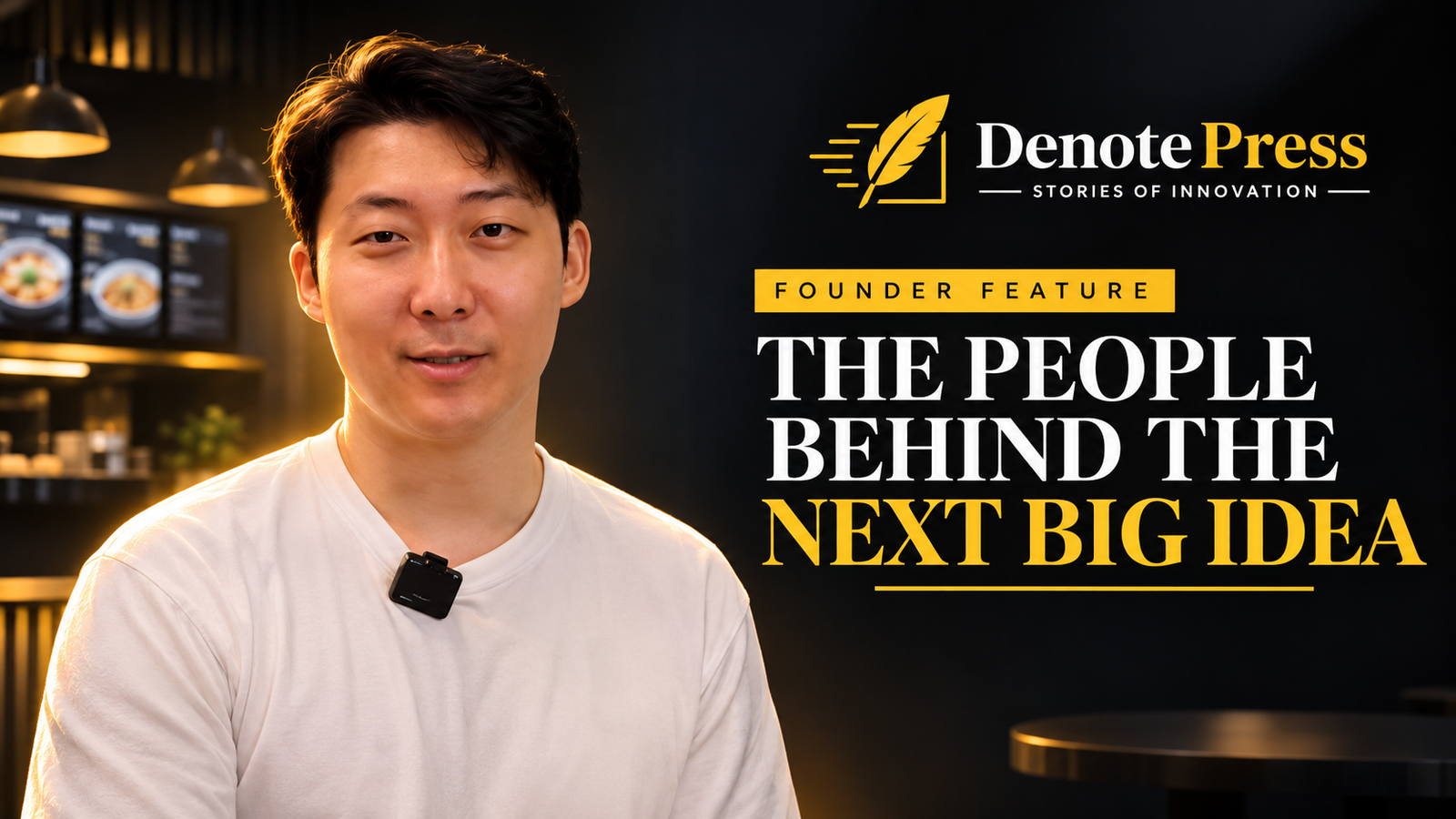
Tae Kim Sopo is the story of a technology executive who moved from artificial intelligence and data to a 20-seat restaurant near Penn Station, with a simple idea: Korean food should be as easy to grab at lunch as a burrito bowl, and as thoughtfully cooked as a tasting menu. Kim is the co-founder and CEO of Kkinee, the company that owns Sopo Korean Eats, a Midtown Manhattan fast-casual brand that opened in the fall of 2024. According to the New York Post, Sopo set out to bring “Michelin-quality Korean food to Midtown,” with menu items priced under $20. Here is how Kim got there, what the restaurant serves, how it was designed and what remains to be proven.
Tae Kim Sopo: Who Is the Founder?
Tae Kim is the co-founder and chief executive officer of Sopo’s parent company. According to a 2024 announcement carried by Mann Report, “T Kim” is co-founder and CEO of Kkinee, owner of Sopo. The brand’s own site calls the company a collective of Korean flavor aficionados, and a restaurant database says it was founded by a group of Korean friends and long-time New Yorkers.
Press coverage uses slightly different forms of his name. The New York Post calls him Tae Kim, the What Now outlet calls him T. Kim and the Amsterdam News describes the owner as Tae Kim. These are the same person across the sources reviewed, though his personal LinkedIn profile is worth checking for the preferred spelling.
Kim is joined by Stephan Kim, who is listed in a people directory as chief operating officer, and by Executive Chef Dennis Hong. What Now interviewed both Kims after the opening. That founding trio, a CEO, an operator and a chef, is the core of the Tae Kim Sopo story.
From Datahunt and FiscalNote to Restaurants
Kim’s earlier career was in technology. A professional directory lists him as co-founder and CEO of Kkinee since August 2023, managing director at FiscalNote from January 2022 to July 2023 and founder and CEO of Datahunt before that. The sources reviewed do not describe those companies or his roles in detail, and they do not explain how his path from data and AI led to restaurants, so this article does not either.
What the coverage does show is how he describes his approach. He told the New York Post that he wanted a “variation in the texture and flavor” of the dishes in a bowl, instead of having a lot of the same, and that he wanted every possible “permutation” of a build-your-own bowl to make sense culinarily. That is a systems-minded view of food: design the components so that any combination works.
The data-driven background also fits the restaurant’s operations, such as ordering through Toast and ChowNow and an in-house machine for kimbap. The tech career is the analytical foundation of Tae Kim Sopo.
Why Sopo Means “Care Package”
The name carries the concept. On the Sopo About page, the company explains that Sopo is short for 소포, a “care package” in Korean, and that this is how it approaches every bowl, roll and side: fast, thoughtful and full of flavor. It says everything is made in-house, from the kimchi to the sauces.
Kim gave a more personal explanation to What Now. Sopo means a small parcel in Korean, he said. When someone orders something on Amazon, there is a sense of anticipation knowing that something quality is about to arrive, and the restaurant thinks of its food the same way, as a package of guaranteed happiness. The design firm described it as small packages that deliver a moment of solace and joy.
The care-package idea gives the brand a warmth that sets it apart from the typical grab-and-go restaurant, and it ties to Korean family traditions of sending food to loved ones. The name is the emotional center of Tae Kim Sopo.
The Problem: The Sad Desk Salad
The market gap was in Midtown lunch. The New York Post described the opportunity: NYC workers in Midtown want affordable, flavorful lunches beyond the ubiquitous “sad” salad, and post-pandemic office attendance is only 5.5% below 2019 levels, meaning there is still a large lunchtime crowd. The paper’s headline framed Sopo among spots serving lunch under $20.
Kim told What Now that the location has a healthy mix of commuters, tourists and students, and that the restaurant offers options for anyone who wants diversity in their food while staying on a budget. A listing on a delivery platform puts it more bluntly: first there was Chipotle for Mexican, then Cava for Mediterranean, and Sopo for Korean, though that is marketing copy.
The comparison with those chains is revealing. Fast-casual restaurants have scaled by simplifying cuisines into customizable bowls, and Korean food has been slower to follow. That gap is the problem Tae Kim Sopo set out to fill.
Building Sopo: Kkinee and the 2023 Start
The company was founded in 2023. The announcement of its first lease said Sopo was founded that year with the goal of defining Korean fast casual and making it a top-of-mind option for a convenient, healthy and delicious meal, whether for take-out, delivery or dining in. It also said the company was building a team of experts with a plan for rapid expansion.
An earlier job posting offers a view into the first hires. A listing for a head chef, posted in November 2023 under the Kkinee name, described a New York-based Korean barbecue-themed fast-casual restaurant chain, a role reporting directly to the CEO overseeing recipe development, operations and kitchen management, and equity eligibility.
The brokerage firm Adams & Company represented the first location, a former Dig Inn space according to the New York Business Journal as cited by What Now. The 2023 start and 2024 opening were fast for a restaurant, and they show a founder who moved quickly from concept to lease. The build-out is the launch phase of Tae Kim Sopo.
Chef Dennis Hong and the Menu
The culinary lead is Chef Dennis Hong. The Sopo homepage says that after years at Michelin-starred Le Bernardin and Jean-Georges, he now brings that training to the Korean comfort food he grew up with. A job posting for the restaurant adds that its recipes come from a chef who cooked at Le Bernardin, Jean-Georges’ Nougatine and Lincoln.
The menu is built around three formats. First are build-your-own plates with a protein and sides. The homepage highlights a Spicy Pork Plate, with pork shoulder in a spicy red pepper sauce and garlic broccoli, sweet soy roasted potato, kale namul and ssam aioli; a Smoked Chicken Plate, with roasted chicken thigh marinated in shiitake and garlic and smoked with rosemary; and a Crispy Tofu Plate with a cornmeal crust and gold pumpkin mash. Second is kimbap, rolled to order, with fillings such as smoked chicken or seared flat iron steak. Third are banchan, the Korean side dishes, including a soy-dipped egg.
The menu also covers dietary needs, with vegetarian, vegan and gluten-free options noted in early coverage. The brand lists allergens on dishes such as the soy-dipped egg, which contains soy, gluten, onion and egg. The menu is the product backbone of Tae Kim Sopo.
The Lifted Lid Design
The restaurant’s design is unusually ambitious for a fast-casual space. The architecture firm Model Practice completed an interior called Lifted Lid for Sopo’s first location in the Garment District. A Danish design site reported that the space won an Architizer award for its dosirak-inspired interior.
The Amsterdam News described how Kim explained the concept: the colors red for gochujang, white for rice and black for hospitality, and a vaulted, textured ceiling resembling a dosirak, the Korean compartmentalized lunch box, built to showcase the food. The firm describes a sculptural box hanging from the ceiling that divides the large room into zones.
Space numbers differ by source. The architecture firm lists the design project at 900 square feet, while the brokerage describes a 3,156-square-foot space with a ground floor and lower level, seating about 20. The building is the 1924 Arsenal Building by Ely Jacques Kahn. The design is the visual signature of Tae Kim Sopo.
Opening in September 2024 and Pricing
Sopo opened in the fall of 2024. Eater included it in its September 2024 new restaurant openings, and What Now reported that the restaurant opened in late September at 463 Seventh Avenue, between West 35th and 36th Streets, near Penn Station.
Pricing was a core part of the pitch. The New York Post listed a Seoul Steak Signature Plate at $16.48 and kimbap at $13.49, and noted that the kimbap is hand-rolled in front of customers and wrapped in foil to go, essentially Sopo’s answer to Chipotle. Prices on delivery platforms are higher: a DoorDash listing shows kimbap from about $13.74 to $18.74, which reflects typical delivery markups. Prices change, so check the current menu.
The restaurant lists a 4.7 average rating from 50 ratings on one delivery platform. That is a small sample from a third-party site. The opening and pricing strategy are the commercial test of Tae Kim Sopo.
Catering and Delivery
Beyond the counter, Sopo sells through several channels. The website lists pickup through Toast, delivery through ChowNow and catering through a separate ordering page, plus gift cards. The catering page describes fresh banchan, kimbap rolled to order, individual bowls and family-style trays for office lunches, team events and private gatherings.
A delivery platform lists a Kimbap Party Pack that serves eight at $122 and a catering platter at $175, along with a complimentary tray of kimchi salad with platters. These figures come from a third-party listing and may differ from the restaurant’s own catering menu.
Catering suits a Midtown location. Office lunches and team events are recurring orders that smooth out the day-to-day variation of walk-in traffic. It also gives a small restaurant a way to reach customers outside its immediate block. Catering and delivery extend the reach of Tae Kim Sopo.
Press and Recognition
The restaurant has collected notable press for a small brand. Its homepage lists coverage from Forbes, which ran a story in November 2025 titled “Fast-Casual New York City Korean Eatery Opens — No Prix-Fixe Meals Here,” the New York Post, Eater and What Now.
In May 2026, the Amsterdam News described a limited-time collaboration with bibigo, the Korean food brand, that ended on May 24, and a visit with Kim and Hong where it said the food was incredible. The publication wrote that Kim is intentional in all things Sopo, from design and ingredients to authenticity and the growth of the business.
A nuance worth noting is that the Forbes headline refers to the restaurant as having opened in November 2025, while other coverage dates the opening to September 2024. The Forbes piece likely reflects a later phase or a different framing, and readers should check the article directly. Press coverage is a major reason Tae Kim Sopo is known beyond its block.
Financing and the Team
The financing story is the opposite of a venture-backed startup. In the sources reviewed, there is no disclosed funding round, investor list or valuation. Dealroom’s Sopo profile shows no funding data, Preqin’s profile lists no investors in the excerpt reviewed and village.ai describes the company as privately held.
The team is small. A company directory lists 10-plus employees. Stephan Kim is listed as chief operating officer, Dennis Hong is executive chef and design partners include Model Practice for architecture, Ordinary People for brand identity and Spreadworks for environmental graphics, according to the architecture firm’s project credits.
The plan for “rapid expansion” in the early announcements has not yet appeared in public sources as a second location. For comparison with companies that publish their rounds, see our story on Dorsia’s Series A, and for more on how funding shapes young businesses, see our Funding News section. The lean financing is a defining feature of Tae Kim Sopo.
Where Sopo Stands in NYC Fast Casual
New York’s fast-casual market is crowded. Salad and bowl chains dominate lunch, and Korean food has been served mainly in sit-down restaurants and barbecue spots. Sopo sits between them, with a build-your-own format and a chef-driven menu.
Sopo’s differentiators are clear. The food is made in-house, including kimchi and sauces. Dishes are designed to work in any combination. A Michelin-trained chef oversees the menu. And the design makes the space memorable. A pulse of industry commentary also frames Korean food as a growing fast-casual category.
The risks are real. Midtown rents and labor costs are high. Lunch traffic depends on office attendance. Competitors can copy a bowl format. A single location concentrates risk, and scaling from one restaurant to a chain is difficult. In a crowded market, Tae Kim Sopo competes on chef quality and design.
Risks and Open Questions
A fair restaurant profile should name the open questions.
One location. The sources reviewed show a single Sopo restaurant, despite early plans for rapid expansion.
Financials. Revenue, profit and funding are not public.
Operating schedule. The website lists Saturday closed, which limits weekend and tourist traffic, so check hours.
Price versus portion. Prices vary between in-store and delivery menus, and value depends on portion size.
Dates and sizes vary. Space size and opening framing differ between sources.
Competition. Fast-casual bowl concepts and Korean newcomers are all targeting the same lunch crowd.
None of these is unusual for a young restaurant. Naming them is part of an honest look at Tae Kim Sopo.
Leadership Style and What’s Next
Kim’s approach is design-minded and concept-led. His quotes focus on the structure of the experience, from permutations that make sense to the intention behind the name, and the trade press describes him as intentional about the design, the ingredients, the authenticity and the happiness of customers. He is also comfortable letting the chef and the design firm shine.
The visible roadmap is modest and tied to the existing location: more catering, limited-time collaborations such as the bibigo partnership, gift cards, a newsletter and a blog on the website. The earlier statements about rapid expansion suggest ambitions beyond one restaurant, though no new locations appeared in the sources reviewed.
The test will be repeat lunch traffic and whether the concept can be copied in a second site without losing quality. That discipline will define the next chapter of Tae Kim Sopo.
Lessons From the Tae Kim Sopo Journey
The Tae Kim Sopo journey offers five practical lessons for founders.
First, borrow a proven format. The build-your-own bowl gave diners a familiar way into Korean food.
Second, hire a chef who raises the floor. Michelin-trained Dennis Hong gave a fast-casual menu credibility.
Third, make the name a story. “Care package” explains the food, the service and the design in two words.
Fourth, invest in design. The dosirak-inspired interior made a small space memorable and earned design attention.
Fifth, stay lean until the model works. A restaurant that proves itself in one location before raising capital keeps flexibility.
Frequently Asked Questions
Who is Tae Kim?
Tae Kim is the co-founder and CEO of Kkinee, the company that owns Sopo Korean Eats. He previously held roles at the technology companies FiscalNote and Datahunt, according to a professional directory.
What is the Tae Kim Sopo story?
It is the story of a technology executive who co-founded a Korean fast-casual restaurant in Midtown Manhattan in 2023, hired a Michelin-trained chef and opened in September 2024 with menu items under $20.
What is Sopo Korean Eats?
Sopo is a Korean fast-casual restaurant at 463 Seventh Avenue in Midtown Manhattan, serving build-your-own plates, kimbap rolled to order and house-made banchan.
What does Sopo mean?
Sopo is short for 소포, which means a care package or small parcel in Korean.
Who is the chef at Sopo?
Chef Dennis Hong leads the kitchen. According to the restaurant, he trained at Michelin-starred Le Bernardin and at Jean-Georges restaurants.
When did Sopo open?
Eater listed it among September 2024 openings, and What Now reported that it opened in late September 2024.
How much does Sopo cost?
The New York Post listed a Seoul Steak Signature Plate at $16.48 and kimbap at $13.49. Prices change, so check the current menu.
Does Sopo offer catering?
Yes. The restaurant offers catering for office lunches, team events and private gatherings, including kimbap platters and family-style trays.
Has Sopo raised funding?
The sources reviewed show no disclosed funding rounds or investors. The company is described as privately held.
Where is Sopo located?
Sopo is at 463 Seventh Avenue, New York, NY 10018, near Penn Station. Check the website for current hours.
Conclusion
Tae Kim Sopo shows how a founder from the technology world can build a restaurant with a clear concept. By pairing a build-your-own format with a Michelin-trained chef, a design that borrows from the Korean lunch box and prices under $20, Kim built a Midtown fast-casual brand that earned coverage from Eater, the New York Post and Forbes within a year. The open questions are expansion, financial performance and whether the experience travels beyond one block. If it does, Sopo may become a model for how Korean food scales in fast casual.
For more founder journeys in food and hospitality, see Vittorio Gargiulo’s Hotiday, Randall Hom’s Hostie and Nopalera’s Series A on Denote Press, or browse all Founder Stories.
